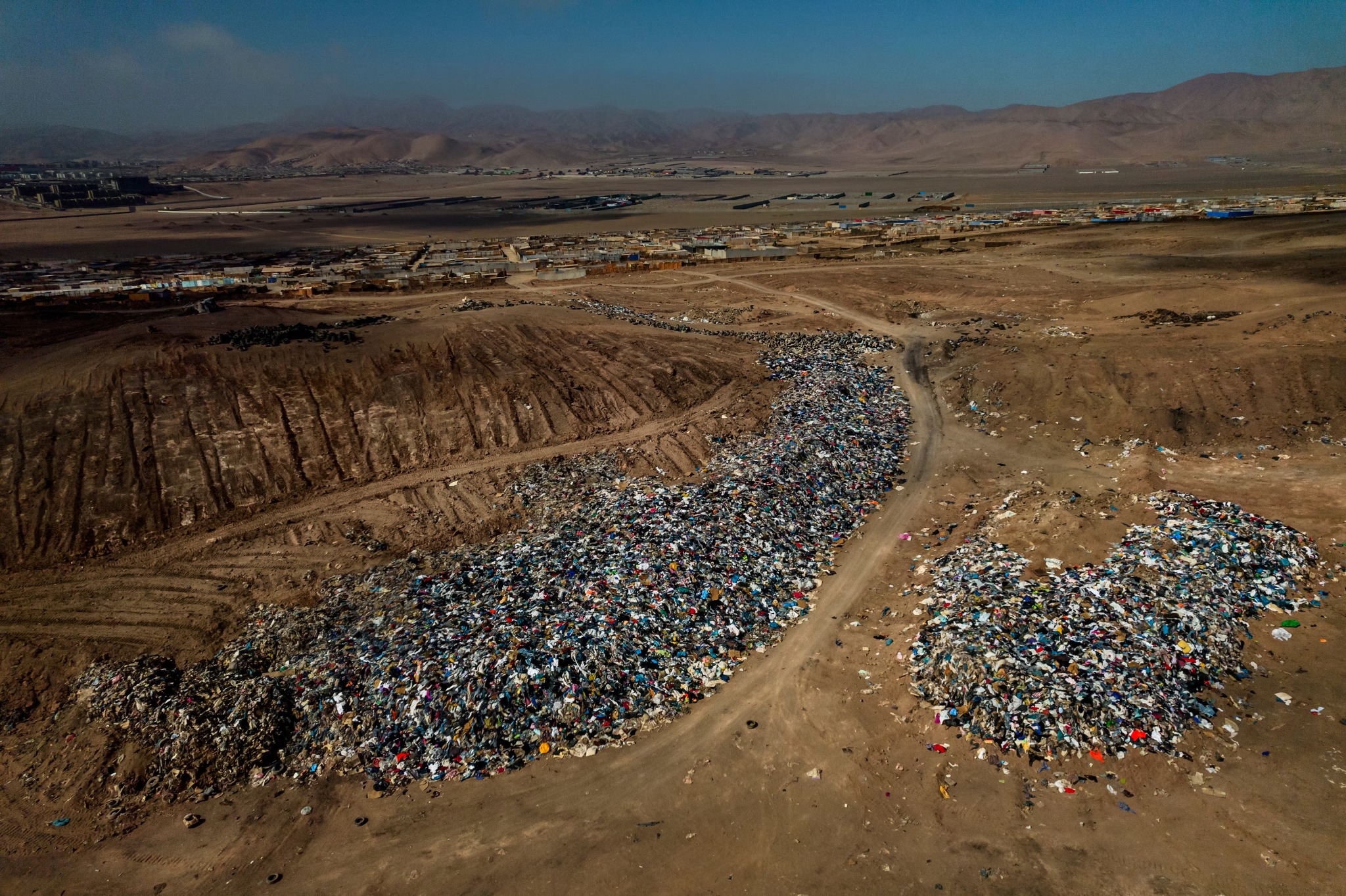
Environmental Issue in Fashion: Chile's Atacama Desert and Sustainability Methodologies
Access to clothing today has been made simpler over the past decades because of the technological developments and changes in the shopping services in the fashion industry. It’s now easier to produce, consume, and dispose of clothing. According to Sustain Your Style's fashion impact report, the second largest polluting industry in the world is fashion, after the oil industry. One of the main contributors to this escalating environmental issue is Fast Fashion (Herold and Prokop). It is an industry with methods of attaining rapid resources off the market through low-cost and low-quality production of clothes, consumed at high speed by today’s generation. This paper will analyze the impact of fast fashion and how it affects the environment, specifically focusing on the landfill of clothes in Chile’s Atacama Desert caused by fast fashion. Moreover, this paper will explore ways to combat fast fashion by studying consumer behaviours and suggest methodologies such as recycling, reusing, and reversing the supply chain to promote a better procedure to achieve sustainability in the fashion industry through extensive research that will contribute to a healthier global environment.
Fast fashion is growing as we breathe because it is one of the most facile sectors of the fashion industry to buy trendy, modern, affordable clothing. It has benefits based on its wide variety of options, sizes, and low-cost pricing that everyone can access and purchase. However, due to overconsumption and overproduction, it has been effortless for people to dispose of their purchased items without knowing where or what happens to the clothes after being disposed of or where the unsold items go. The clothing sector is polluting the environment with rapid momentum, and the fashion industry has risen to the Top 3 of the biggest polluting industries in the world. The fashion industry’s reputation is “being strongly affected by fast fashion products,” the leading brands that started the fast fashion concept are Zara, Shein, Primark, H&M, and Topshop (Zanjirani Farahani, Asgari, V an Wassenhove). These brands make low-quality and low-cost items that are easily accessible to consumers as these brands have expanded globally because of their success. Another issue is the fast fashion consumers who purchase trendy items, and when the trend is over, they are quick to replace them by rebuying the fast fashion brands. According to Zanjirani Farahani’s journal article, the cause why fast fashion brands sell cheap clothes is not about the quality and longevity but how much these big fast fashion companies save costs. It is a cycle of making trendy clothes and replacing them quickly to attract consumers without reflecting on how they can affect the environment and society.
These easily replaceable fast fashion clothes get disposed of in landfills such as Chile Atacama Desert. This desert in Northern Chile and Southern Peru is known for having one of the healthiest biodiversity conservation areas in the world and is considered a high priority for having endangered native plants and endangered biodiversity (Carevic). One of the main issues that cause the Atacama Desert environmental issue is fast fashion industrialization, where mountains of fast fashion clothes get piled up in this fog desert. According to National Geographic, Atacama has become one of the world's fast-growing dumps of discarded clothes because of fast fashion production, and the United Nations also coined this desert issue as“an environmental and social emergency” on Earth. This issue of quick disposal and carelessness of producers and consumers have put a big hole in the environment and is a sign of privilege and selfishness that needs to stop for the greater good of the ecosystem and a healthier society. Today’s generation, especially the younger generation, “have adapted the promulgation of a disposable mentality” (Hayes), and they have also lost the idea of value, uniqueness, expression, significance, quality, and exclusiveness of clothes and what fashion really is. Many use fashion as a contrivance to express themselves and be confident, but most want to feel belonging, which can be why they feel the need to follow all the trends made every second. Fast fashion has not helped this issue, but unfortunately, capitalizes on these consumer's behaviours.
In the past few decades, mass production of fast fashion has doubled, which has made the fast fashion industry face global scrutiny because of its effects on the global environment. However, it is not just the mass production who have contributed to this issue but also the consumers. According to Forbes, the fast fashion industry thrives because it is heavily dependent on and influenced by its consumers. Research and debates have also surfaced to know what is hindering consumers from being sustainable and reducing the consumption of fast fashion. According to The Fast Fashion vs Environment Debate, consumers are aware of the ongoing and growing environmental and labor exploitation in fast fashion. 80% have shown negative feelings about what fast fashion does to the environment. However, consumers still purchase fast fashion because of the financial barrier since it is cheaper and more affordable for the majority of people who tend to keep up with fashion trends. Other than that, “consumers lack precise information about… key components of fashion products” (Papasolomou, Melanthiou, Tsamouridis) and its environmental effects. This study has also shown that 65% of women have opposed feelings against fast fashion. However, there is a big difference when it comes to consumer actions and how contradictory their actions are with their feelings because of the purchase behaviors that still made them purchase from fast fashion brands because of the affordability as fast fashion companies continue to “encourage more frequent impulse consumption with low price strategies,” (Papasolomou, Melanthiou, Tsamouridis) price discounts and clearances. Most of these consumers contradict their personal values because of the freedom and accessibility to follow trends compared to the societal difference before, where only people of a specific class or status could afford fashionable clothes.
Combatting fast fashion requires a lot of knowledge and a vigorous ethical understanding. It may seem like fast fashion is impenetrable to reduce now, but it can still be minimized by following methodologies for better ethical production and consumption. In Herold and Prokop’s study about Rental Clothing Schemes as a Sustainable and Affordable Alternative to Fast Fashion, they introduce a different UK perspective on methods of sustainability, such as rental clothing, as methodologies from Zanjirani Farahani, Asgari, and Van Wassenhove on recycling, reducing and reusing fashion products as research have also shown that “$500 billion is lost annually due to clothing underutilization and a lack of recycling” (Herold and Prokop), which shows the important of being more green on fashion. First is helping customers become good consumers and develop behaviors that outline or help the sustainability of the environment based on their fashion purchases. Among these various methods to help with sustainability in fashion is reselling pre-owned items or donating them to charity shops, and one of the other top ways is rental clothing, which is a method that benefits both the consumers and the manufacturers. Renting clothes has the “potential to increase lifecycles and quality as well as consumer satisfaction. This clothing scheme is part of the circular economy by reducing waste and increasing use” (Herold and Prokop). This method is well known and initiated by stylists because renting high-quality clothes and returning them in the same condition maintains the quality and offers longevity of these clothing pieces.
In terms of sustainability practices and methodologies for fast fashion companies to be more sustainable brands, research suggests having more information on the items that fast fashion companies are selling for knowledge of the consumers by fast fashion firms to “accept and address their social and environmental footprints” (Papasolomou, Melanthiou, Tsamouridis) and fashion retailers need to provide factual information that is easy to understand about its impacts on the environment. Another option is showing light on these fast fashion companies, which is to be accomplished by other fashion companies that promote and practice sustainability in fashion, such as Vestiaire Collective. They are a reselling fashion company that sells pre-loved items that are more often designer and high fashion brands. Recently, they did a campaign that introduced their company banning fast fashion companies from their store because of environmental issues such as overconsumption, overproduction, and climate change, with a whopping number of “92 million tons of textile waste thrown away every way” (Vestiaire Collective). As part of their mission, they banned over 30 fast fashion brands, including Zara, Abercrombie & Fitch, and H&M, where they virtually displayed this opposition in the fashion capitals of the world through Artificial Intelligence (AI) technology where they had visuals and video in the fashion capitals of the world such as New York Times Square and The Eiffel Tower to show what textile landfill looks like if it’s in the consumer’s city and not landfills such as Chile’s Atacama Desert.
Video Source: Vestiaire Collective
Both fast fashion consumers and manufacturers have a lot of catching up to do when it comes to changing what fast fashion does in the world. It requires indoctrination on the impact of fast fashion and self-study, awareness, and willingness to learn about its effects on the environment. Moreover, consumer behaviours are also a vital key to preventing the fast fashion industry from partaking in the destruction of Earth’s environmental situation through landfills and its carbon footprint. The methodologies mentioned above, such as recycling, reusing, reversing the use of the supply chain, and renting clothing will be one of the achievable consumer behaviours that will help environmental growth in fast fashion. For the fast fashion firms, companies, and industries, procedures and methodologies they should follow are being more honest, informational, and ethical in what they manufacture. They should outline their sustainability practices for the consumers, which will help them decide on where to buy clothes or will make them “think first, buy second.” The causes of environmental hurt because of fast fashion is because of human nature’s lack of empathy, knowledge, and care for the environment and their blindness because of the glitz and glamour that fashion is primarily viewed as. All in all, improvement in the fast fashion sector will have to be done by the same people involved in the rise of fast fashion: the manufacturers and the consumers.
xo, G
References:
(2023). “Fashion & Environment.” SustainYourStyle,
www.sustainyourstyle.org/en/whats-wrong-with-the-fashion-industry.
Bartlett, John. (2023) “Chile’s Atacama Desert Has Become a Fast Fashion Dumping
Ground.” Environment, National Geographic,
www.nationalgeographic.com/environment/article/chile-fashion-pollution.
Bringé, Alison. (2023) “Council Post: The State of Sustainability in the Fashion Industry
(and What It Means for Brands).” Forbes, Forbes Magazine,
www.forbes.com/sites/forbescommunicationscouncil/2023/01/02/the-state-of-sustainabi
lity-in-the-fashion-industry-and-what-it-means-for-brands/?sh=1e55a1981c82.
Carevic, Felipe S. (2016). Towards an integration of plant ecophysiological traits for the
conservation of endangered species in ecosystems under water stress. Idesia (Arica),
34(3), 33-38. https://dx.doi.org/10.4067/S0718-34292016000300005
Collective, Vestiaire. (2013). “Vestiaire Collective Bans Industry Giants from Platform in a
Second Wave of the Fight against Fast Fashion.” Vestiaire Collective Bans Industry
Giants From Platform In A Second Wave Of The Fight Against Fast Fashion.
www.prnewswire.com/news-releases/vestiaire-collective-bans-industry-giants-from-pla
tform-in-a-second-wave-of-the-fight-against-fast-fashion-301992220.html.Montellano 9
Hayes, Adam. (2023) “Fast Fashion Explained and How It Impacts Retail Manufacturing.”
Investopedia, Investopedia, www.investopedia.com/terms/f/fast-fashion.asp.
Herold, P . I., & Prokop, D. (2023). Is fast fashion finally out of season? Rental clothing
schemes as a sustainable and affordable alternative to fast fashion. Geoforum, 146,
103873. 10.1016/j.geoforum.2023.103873
Papasolomou, I., Melanthiou, Y ., & Tsamouridis, A. (2023). The fast fashion vs environment
debate: Consumers' level of awareness, feelings, and behaviour towards sustainability
within the fast-fashion sector. Journal of Marketing Communications, 29(2), 191-209.
10.1080/13527266.2022.2154059
Zanjirani Farahani, R., Asgari, N., & V an Wassenhove, L. N. (2022). Fast Fashion,
Charities, and the Circular Economy: Challenges for Operations Management.
Production and Operations Management, 31(3), 1089-1114. 10.1111/poms.13596
Lorem ipsum dolor sit amet, consectetur adipiscing elit, sed do eiusmod tempor incididunt ut labore et dolore magna aliqua.
Post a comment